


In order to tell the story of Pierpaolo Pregnolato’s workshop, Damocle Edizioni in Venice, it is necessary to go back to the time of his first connection with the printing press. And this story begins at the end of the nineteenth century.

His great-grandparents opened the first printing house in Chioggia, the Premiato Stabilimento Tipografico e Legatoria Giulio Vianelli. A place that survived time, two world wars, generational changes, but not the necessary and sometimes painful modernization of work.
The history of the typography was interrupted in the ’60s, when his grandparents, due to the increasing innovation in printing technologies, closed the business.
Growing up among the movable characters in lead or carved in wood, Pierpaolo tried to recreate in part the traditional working environment of his family.
What is Pierpaolo’s job now at Damocle Editions?
Pierpaolo continues to build books as they used to do, keeping alive a tradition that in the 1500s helped make Venice great.
His workshop is called Damocle Edizioni, and it is a small high-quality publishing house in the heart of Venice, just a few minutes from Rialto, behind campo S. Aponal.
He came to Venice to study Modern Literature and nurtured the dream of carrying on the tradition of typographic craftsmanship.
After finishing university, he began to work as an apprentice in some of the city’s workshops, learning the secrets of the trade.
At the end of the fifteenth century, Venice produced a third of the books printed in the world, and during the sixteenth century it counted more printers than most of the main European cities combined.
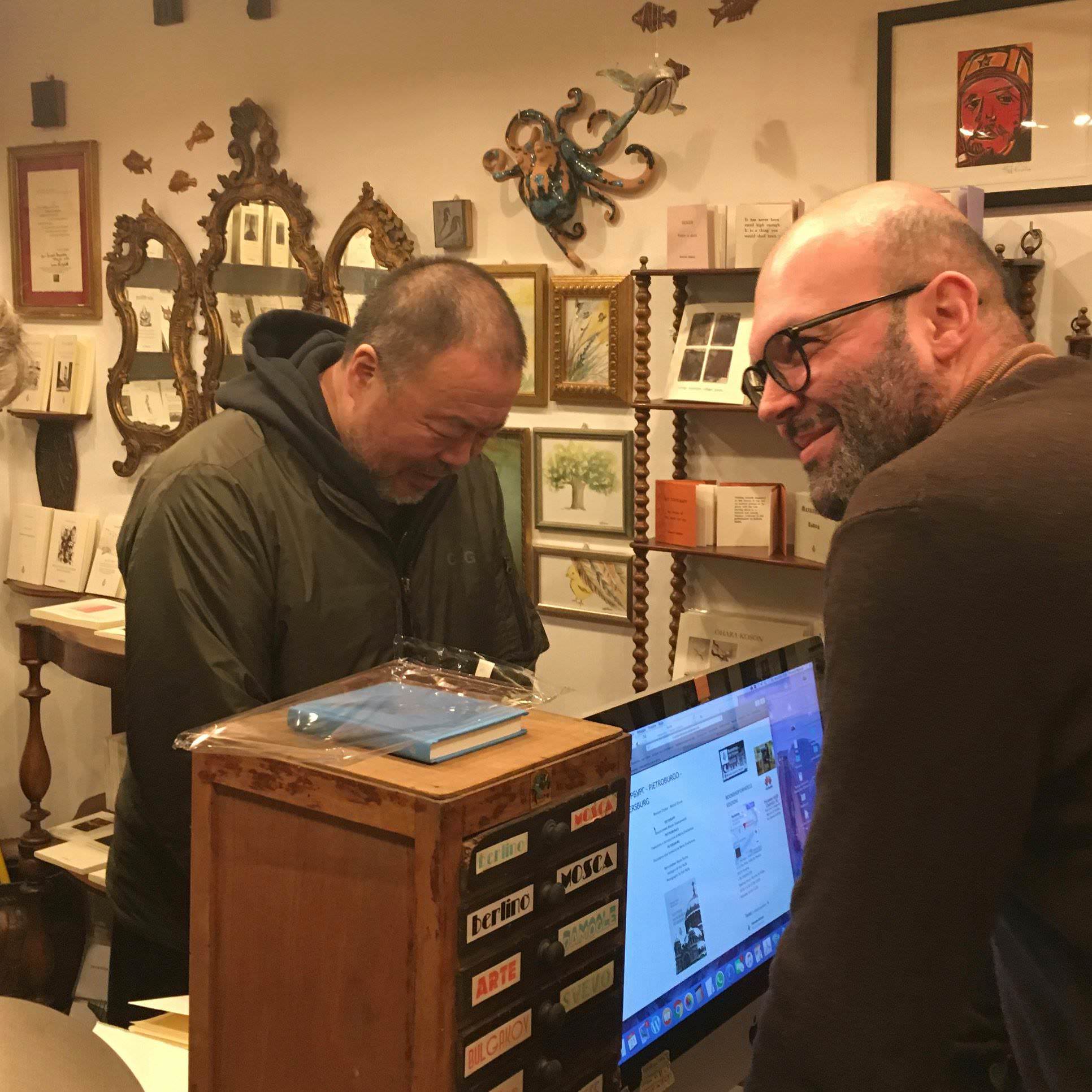


His passion for printing follows a great passion for books: he spends hours in the library looking for rare texts, never translated into Italian or no longer on the market, abandoned pearls to be re-proposed with a new original look, translated and framed in a work of art.
Thus was born the collection of “Invisible Cities“, a collection of books that tell of imaginary or imaginatively relocated cities.
For example, “If London were like Venice“, a text of the late nineteenth century never translated into Italian, in which the author hypothesizes a London made of canals and gondolas, and embellished with vintage photographic collages, to help the reader’s imagination.
